PETG-CF first layer: bed, surface and adhesive
Quick answer
PETG-CF sticks best to textured pei at a bed temperature of about 80 C. Use glue stick as release.
Bed temperatures and surface preparation are conventions drawn from manufacturer guidance. Your build plate maker knows your plate better than any general table.
| Setting | Value |
|---|---|
| Bed temperature, first layer | 80 C |
| Bed temperature, later layers | 70 to 85 C |
| Nozzle temperature | 240 to 260 C |
| Surface | Textured PEI |
| Adhesive | Glue stick as release |
| Enclosure | Optional |
| Warping tendency | low |
What a correct first layer looks like
The lines should be slightly wider than they are on later layers and just touching each other, giving a continuous surface with no gaps and a faintly matte finish. Distinct round strands with gaps between them mean the nozzle is too high. A glossy surface with ridges pushed up between the lines means it is too low.
As PETG, with a hardened nozzle.
PETG-CF specifics
Carbon filled and abrasive. A hardened nozzle is not optional.
PETG-CF is forgiving enough that a first layer problem is usually genuinely the first layer: offset, plate cleanliness, or bed temperature. Clean the plate with isopropyl alcohol first, since finger oils are the single most common cause of a part that will not stick.
Build surfaces and adhesion
- Geeetech
Geeetech 6-Pack 3D Printer Glue Sticks, 36g, Enhanced First Layer Adhesion
$11.99 Check pricePrices change often - HENYCEE
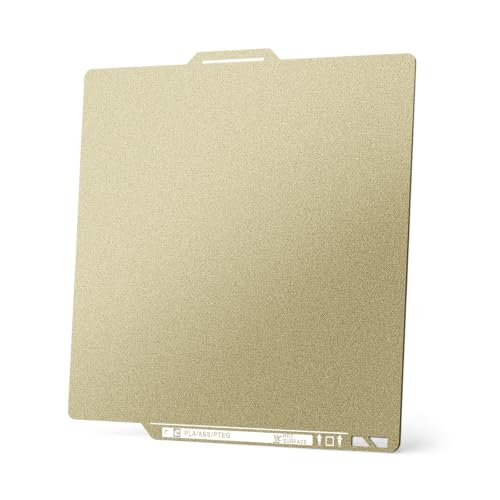
HENYCEE PEI Build Plate for Bambu Lab X2D/P2S/X1/X1C/X1E/P1P/P1S/A1
$16.99 Check pricePrices change often


Common questions
What bed temperature for PETG-CF?
About 80 C for the first layer, then 70 to 85 C for the rest of the print. Running the first layer slightly hotter helps it key into the plate, and dropping back afterwards reduces the chance of the lower part of a tall print softening and bulging, which is sometimes called elephant foot.
Do I need glue for PETG-CF?
Yes, use glue stick as release. A thin even film is enough, and more is not better.
How do I set the Z offset?
Print a single layer patch, let it cool, peel it off and measure it with calipers. If you asked for 0.2 mm and measured 0.28 mm, lower the nozzle by 0.08 mm. Change the offset in small steps and confirm the direction on your machine first, because a few invert the sign and a large blind adjustment can gouge the plate.
Why did it stick last week and not now?
Plate contamination is the usual answer, and it builds up gradually so the failure seems sudden. Oils from handling parts transfer to the surface every time you touch it, and they repel plastic long before the plate looks dirty. Wash with warm water and dish soap, or wipe with isopropyl alcohol, and adhesion usually returns immediately.