Best 3D printer nozzles
Quick answer
The XIFOWE 16-pack of MK8 brass nozzles ($7.19) covers 0.2mm to 1.0mm and is the right default if you print plain PLA or PETG; switch to a hardened steel set like the Official Creality 8-pack ($28.99) only once carbon fibre, glow-in-the-dark or another filled filament enters the rotation.
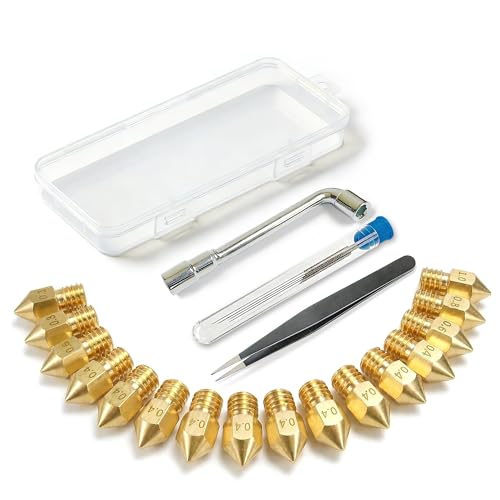
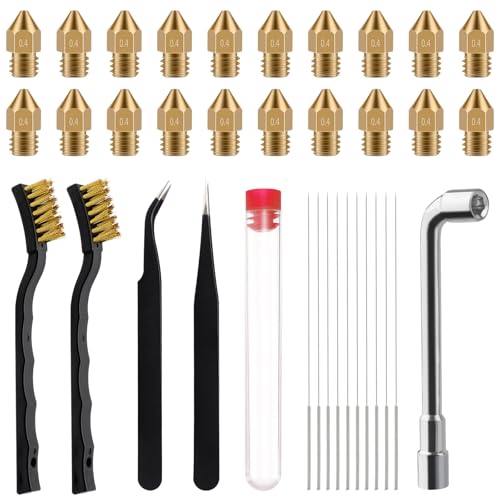
3D Printer Nozzle Kit, 16PCS MK8 Brass Nozzles 0.2/0.4/0.6/0.8/1.0mm
A 16-piece brass set spanning 0.2mm to 1.0mm covers the sizes most owners actually swap between for fine detail or fast drafts, and brass is cheap enough to lose or clog without regret.
The three tiers
Beginner: Best variety pack
a PLA or PETG printer who wants spares in more than one diameter without overspending- Beginner pick
3D Printer Nozzle Kit, 16PCS MK8 Brass Nozzles 0.2/0.4/0.6/0.8/1.0mm
$7.19 Check pricePrices change often
This 16-piece MK8 set includes 0.2mm, 0.4mm, 0.6mm, 0.8mm and 1.0mm nozzles in brass, which is the standard nozzle material and machines easily to a clean bore. Brass conducts heat well and is inexpensive enough to keep several spares on hand for when one clogs or gets cross-threaded during a hotend swap.
Not for: anyone running carbon-fibre, glow-in-the-dark, glitter or other filled or abrasive filament; brass wears out fast against those materials and a worn bore prints an oversized, inconsistent line width
Intermediate: Best hardened steel starter set
someone who prints filled filament occasionally alongside regular PLA or PETG- Intermediate pick
ELEGOO 5pcs 0.4/0.6/0.8mm Harden Steel Nozzles for Neptune 3/Pro/Plus/Max
$9.99 Check pricePrices change often

This ELEGOO 5-pack covers 0.4mm, 0.6mm and 0.8mm in hardened steel, which resists the wear that carbon-fibre and other filled filaments cause. Keeping a small hardened set alongside a brass set means the right nozzle is already on hand instead of ordering one after a print already shows uneven extrusion.
Not for: a printer that only ever runs plain PLA or PETG; hardened steel also conducts heat slightly less evenly than brass, which is a real tradeoff, not a free upgrade
Expert: Performance ceiling
a print farm or heavy user running filled and abrasive filament as a regular part of the mix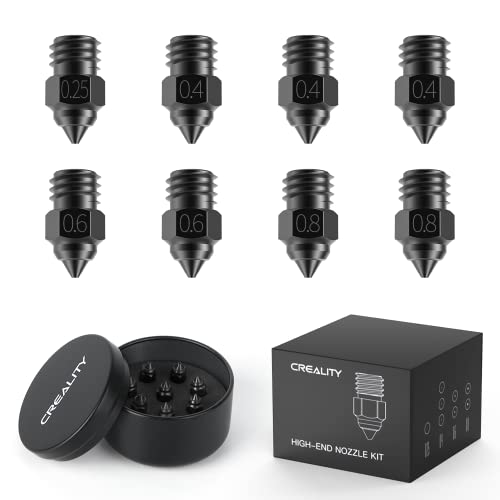
This 8-pack of Official Creality hardened steel nozzles is built for repeated high-temperature, high-wear use and keeps a full rotation on hand so a worn nozzle gets swapped instead of tolerated. For a shop printing carbon-fibre nylon or glow filament on a schedule, having eight hardened nozzles in reserve avoids downtime waiting on a single spare.
Not for: a hobbyist who prints a spool or two a month. Do not buy eight hardened steel nozzles if you print mostly PLA and PETG; the cheaper brass variety pack above does that job for a quarter of the price.
| Set | Price | Material | Sizes included |
|---|---|---|---|
| XIFOWE 16-Pack MK8 | $7.19 | Brass | 0.2 / 0.4 / 0.6 / 0.8 / 1.0mm |
| ELEGOO 5-Pack | $9.99 | Hardened steel | 0.4 / 0.6 / 0.8mm |
| Official Creality 8-Pack | $28.99 | Hardened steel | 0.4mm (high-temperature wear resistant) |
Why does a brass nozzle wear out on some filaments and not others?
Brass is a soft metal compared to the particles suspended inside a filled filament. Carbon-fibre filament, glow-in-the-dark filament and glitter-fill filament all carry hard particles through the melt zone, and those particles scrape against the inside of the nozzle bore on every pass. Over enough meters of extrusion, that scraping widens the bore beyond its stated diameter, which shows up as inconsistent extrusion width and looser tolerances.
Plain PLA, PETG, ABS and ASA carry no hard fill, so a brass nozzle bore stays close to its original diameter for a very long service life. There is no need to pay for hardened steel unless a filled or abrasive filament is actually in the print queue.
Does a hardened steel nozzle need a higher hotend temperature?
No, the nozzle material does not raise or lower the temperature a filament needs. Print temperature is set by the filament, not the nozzle. What a hardened steel nozzle does change is durability against wear, and in some cases slightly less even heat transfer than brass, which is why brass remains the better default for filaments that do not need the extra wear resistance.
What nozzle size should I use for most prints?
A 0.4mm nozzle is the standard size that ships on most FDM printers and is the right choice for the large majority of prints. It balances detail and print speed well enough that most owners never need to change it. Move to a 0.2mm nozzle only for projects that need fine surface detail, and to a 0.6mm or 0.8mm nozzle only when speed matters more than detail, for example printing a large, simple enclosure part.
How many nozzles should I actually buy at once?
Buy a full variety pack once, in whichever material matches the filament actually being printed, rather than ordering single nozzles repeatedly. A 16-piece brass set at under $10 works out to less than 50 cents per nozzle, which is cheap enough to keep several 0.4mm spares on hand plus a couple of alternate sizes for specific projects.
How we chose
This roundup is researched from manufacturer listings and published specifications, not from in-person testing. Every nozzle named is checked against PrintFarmCalc's own catalog of verified Amazon listings before it is recommended.
The deciding factors were nozzle material (brass versus hardened steel), how many diameters a set covers, and whether the pack size matches how often a given type of user actually needs a spare.
Buying tips
Brass or hardened steel?
Brass is the right default for plain PLA, PETG, ABS and ASA: it heats evenly and machines to a clean, consistent bore. Hardened steel is only necessary for filaments loaded with hard particles, carbon fibre, glow-in-the-dark phosphors and glitter fill are the common ones, because those particles scrape a soft brass bore wider with every print.
Does nozzle diameter change what a printer can do?
A smaller nozzle, 0.2mm or 0.3mm, prints finer detail and thinner walls but takes much longer per print. A larger nozzle, 0.6mm or 0.8mm, lays down more plastic per pass and finishes faster but loses fine detail. Most owners keep a 0.4mm nozzle installed most of the time and swap only for a specific project.
How do I know when a nozzle is worn out?
A worn nozzle shows up as inconsistent line width, gaps between perimeter lines that used to touch, or extrusion that looks thinner on one side of a print than the other. Once a brass nozzle has visibly egg-shaped wear at the tip under a loupe, replace it rather than trying to recalibrate around it.
Keep more than one size on hand
A single spare 0.4mm nozzle is not enough for most owners. A clogged nozzle mid-project is common enough that keeping at least three or four spares of the primary size, plus one or two alternate diameters, avoids a delay waiting on a replacement to ship.
Other options worth knowing about
- Mudder
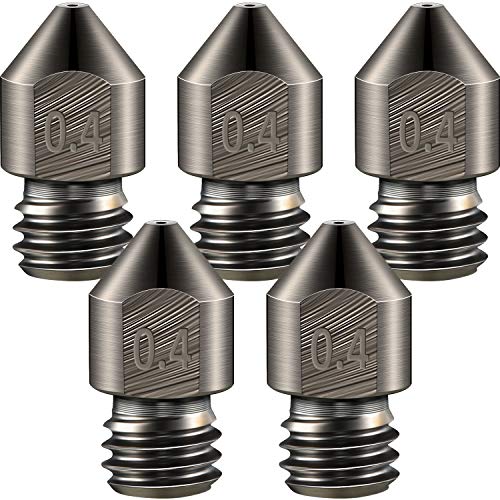
Mudder 5 Pcs Hardened Steel Nozzles 0.4mm Mk8 3D Printer Nozzles
$8.49 Check pricePrices change often - XIFOWE
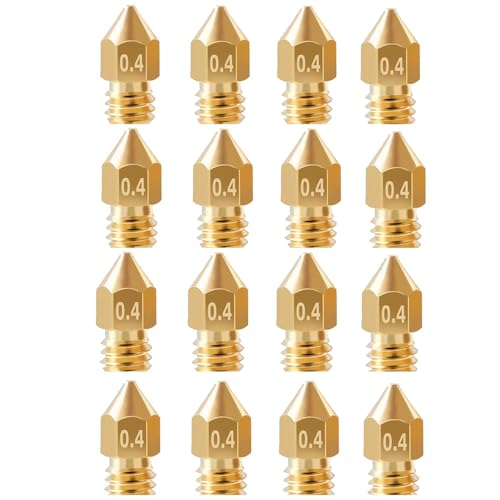
XIFOWE MK8 Nozzles 25 pcs 0.4mm 3D Printer Extruders Brass Nozzles
$9.99 Check pricePrices change often


Common questions
Do I need a hardened steel nozzle for PLA?
No. Plain PLA carries no abrasive fill, so a brass nozzle bore stays close to its original diameter for a long service life. Hardened steel is only worth the extra cost for filaments loaded with hard particles, such as carbon-fibre or glow-in-the-dark filament, which scrape a soft brass bore wider over time.
What is the difference between a 0.4mm and a 0.2mm nozzle?
A 0.2mm nozzle lays down a thinner line of plastic, which allows finer surface detail and thinner walls but takes much longer to finish a print. A 0.4mm nozzle is the standard size on most printers and is the right default for the majority of projects, reserving 0.2mm for models where fine detail matters more than print time.
How often should nozzles be replaced?
There is no fixed schedule; replace a nozzle when print quality shows the signs of wear, inconsistent line width, gaps between perimeter lines, or thinner extrusion on one side of a print. A brass nozzle printing only PLA can last a very long time, while a brass nozzle printing carbon-fibre filament can wear out within a few spools.
Can I use a brass nozzle with carbon-fibre filament?
It will work for a print or two, but the hard carbon particles scrape the soft brass bore wider with every meter of filament extruded, so extrusion becomes inconsistent quickly. Hardened steel resists that wear and is the correct nozzle material for carbon-fibre, glow-in-the-dark and other filled filaments.
Do all printers use the same nozzle size and thread?
No. MK8 is the most common thread and body style, used across the Ender line and many other printers, but not universal. Bambu Lab, some Creality machines and other brands use their own hotend and nozzle designs. Check a printer's specific hotend before buying a nozzle set to avoid one that does not fit.