Layer adhesion and part strength
Quick answer
A layer taller than the nozzle orifice cannot bond to the layer below it, which makes layer height, not just material choice, the first thing to check when a printed part splits cleanly along its layer lines under load.
The physical limit tying nozzle diameter to layer bonding is basic thermoplastic extrusion physics. General strength guidance, such as how print orientation and infill affect real-world part failure, reflects widely reported hobbyist and engineering practice rather than a single published standard.
Why do 3D printed parts break along layer lines instead of somewhere random?
A printed part is not one continuous piece of plastic; it is a stack of layers fused together after the fact. The plastic within a single layer is essentially continuous and close to the raw material's full strength, but the bond between two layers is only as strong as how well the top of one layer remelted and fused with the bottom of the next while both were briefly hot. That bond is almost always the weakest point in the part, which is why failures under load so often trace a clean line along a layer boundary rather than tearing across the print in a random direction.
How does layer height affect layer adhesion?
Layer height has a hard physical ceiling: it can never exceed nozzle diameter, since a taller layer cannot be pressed into contact with the layer below it and simply will not bond. Within the usable range, roughly a quarter to three quarters of nozzle diameter, thinner layers generally bond somewhat more reliably, since there is proportionally more contact area and reflow between each layer and the one before it relative to the plastic being deposited. This is one reason a part meant to bear real load is often printed at a shorter layer height than a purely decorative one, even on the same printer and nozzle.
How does print orientation affect part strength?
A part is strongest when the direction of expected load runs through the continuous plastic within layers, not across the weaker bond between them. A bracket printed flat, with layer lines running perpendicular to the direction it will be bent, is far more likely to snap along a layer line than the same bracket printed on edge, where the load runs along the layers instead of across them. Orientation is often a bigger lever on real-world strength than material choice or infill percentage, and it costs nothing extra to get right.
Does infill percentage affect layer adhesion, or is that a separate issue?
They are separate issues that are often confused. Infill percentage changes how much of the part's interior volume is filled with plastic, which mostly affects compressive strength and weight. Layer adhesion is about how well each layer bonded to the one before it, which depends on temperature, layer height and cooling, not on infill percentage. A part can have 80 percent infill and still fail along a layer line if the layers themselves bonded poorly, and a part at 15 percent infill with excellent layer adhesion can outperform it under a bending load.
Do different filament materials bond layers differently?
Yes, in general terms. PLA, with a density of about 1.24 g/cm3, bonds layers reliably across a fairly wide range of settings, which is part of why it is forgiving for beginners. PETG, at about 1.27 g/cm3, tends to bond layers strongly when temperature is dialed in, sometimes producing parts where the layers are harder to separate than the raw material itself. ABS and ASA, at about 1.04 and 1.07 g/cm3, generally need a warmer, more stable environment, an enclosure with steady ambient heat, to bond layers well, since drafts and rapid cooling weaken their layer adhesion more than they affect PLA. TPU, at about 1.21 g/cm3, is flexible enough that its layer bonds are less likely to be the point that fails first, since the material tends to deform and absorb load rather than snap cleanly.
Does an enclosure improve layer adhesion?
For materials sensitive to ambient temperature and drafts, generally yes. Keeping the space around a print warmer and free of sudden airflow lets each new layer stay hot longer before the next one is deposited on top of it, improving the chance of a full reflow bond. This matters most for ABS and ASA, both of which are also known to emit VOCs and ultrafine particles while printing, so an enclosure used for this purpose should be paired with real extraction or ventilation rather than left sealed with no airflow at all.
How can I check a print's real strength without lab equipment?
Simple mechanical checks reveal a lot: flexing a part by hand in the direction it will actually be loaded, applying steady pressure rather than a sudden shock, and inspecting any break for whether it separated cleanly along a flat layer line, a sign of weak layer adhesion, or tore unevenly through the plastic itself, a sign the material or wall thickness was closer to its limit than the bond between layers. These are informal checks based on how the part failed, not a substitute for published material specifications, but they reliably point toward whether the next print should change orientation, layer height, or temperature.
| Material | Density (g/cm3) | General adhesion behavior |
|---|---|---|
| PLA | 1.24 | Bonds reliably across a wide range of settings |
| PETG | 1.27 | Bonds strongly once temperature is dialed in |
| ABS | 1.04 | Needs stable warmth to bond well; drafts weaken it |
| ASA | 1.07 | Similar to ABS; benefits from a stable enclosure |
| TPU | 1.21 | Flexes and absorbs load rather than snapping at a layer |
Equipment mentioned here
- LKNNEASTO
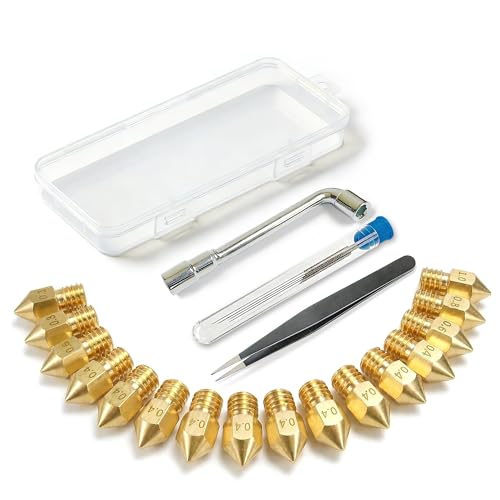
3D Printer Nozzle Kit, 16PCS MK8 Brass Nozzles 0.2/0.4/0.6/0.8/1.0mm
$7.19 Check pricePrices change often - Mudder
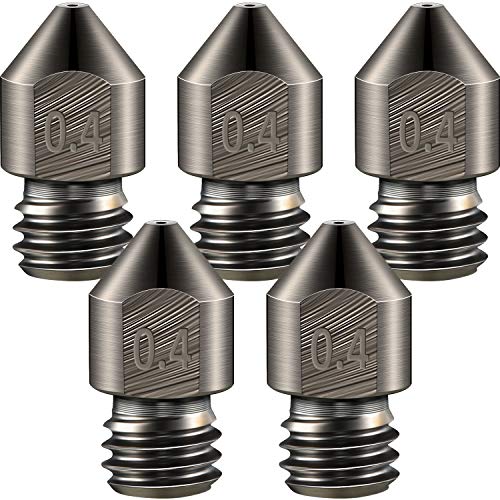
Mudder 5 Pcs Hardened Steel Nozzles 0.4mm Mk8 3D Printer Nozzles
$8.49 Check pricePrices change often - XIFOWE
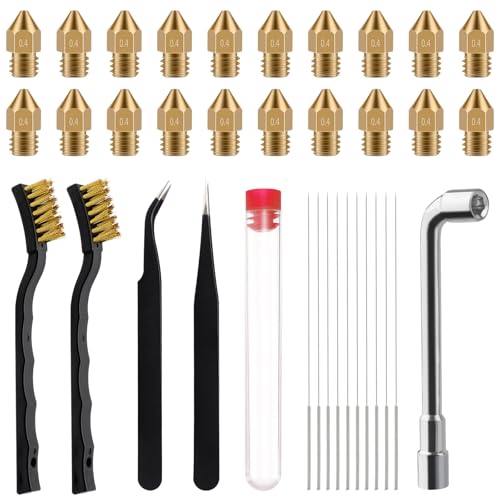
XIFOWE MK8 Nozzles 25 pcs 0.4mm 3D Printer Extruders Brass Nozzles
$9.99 Check pricePrices change often


Safety
Common questions
Why does my part always break along the same flat line?
That flat line is almost certainly a layer boundary, the weakest point in most FDM parts. It happens because plastic within a single layer is close to continuous, while the bond between two layers depends on how well they remelted and fused together, which is rarely as strong. Reprinting the part in a different orientation, so the load runs along layers instead of across them, is usually the fastest fix.
Can I fix weak layer adhesion just by increasing infill?
No. Infill percentage mostly affects the interior fill volume and compressive strength, not how well individual layers bonded to each other. If a part fails by splitting cleanly along a layer line, the fix is usually a shorter layer height, a higher print temperature within the material's range, better ambient temperature control, or a different print orientation, not more infill.
Is a shorter layer height always stronger?
Generally it improves layer adhesion somewhat, since there is more contact and reflow between adjacent layers relative to material deposited, but it is not the only factor and comes with a real print time cost. Print orientation and temperature control typically have a larger effect on real-world strength than pushing layer height to the bottom of the usable range.
Why do ABS parts sometimes feel weaker than PLA parts even though ABS is tougher raw material?
ABS needs a stable, warm environment to bond its layers well; drafts and rapid cooling common in an open-frame printer weaken its layer adhesion more than they affect PLA. A poorly enclosed ABS print can end up weaker in practice than a well-printed PLA part, even though ABS as a raw material resists impact and heat better. An enclosure with steady ambient warmth generally closes that gap.
Does printing at a hotter temperature always improve layer adhesion?
Only within the material's reasonable range. A hotter nozzle lets each new layer remelt more of the layer beneath it, generally improving bonding, but going too far causes sagging, stringing and loss of dimensional accuracy, which can undermine strength in other ways. The goal is the top end of a material's workable temperature range paired with stable ambient conditions, not the highest temperature the hotend can reach.