How diode lasers work
Quick answer
A diode laser generates light by driving current through a semiconductor chip, which emits a beam around 445 nanometers (visible blue light) that a lens focuses onto the material. A machine such as the ATOMSTACK A10 Pro V2 ($239.99) uses this design with a fixed-focus module, and the beam only cuts material that absorbs blue light well, which is why clear acrylic cannot be cut on a diode laser at any power.
The wavelength, spot size formula and depth of field are published physics that apply to any focused laser beam. The pass-count guidance and lens recommendations are common practice among diode laser owners, not a single manufacturer spec.
What actually produces the light inside a diode laser?
A diode laser makes light in a small semiconductor chip, the same basic technology behind a laser pointer or a Blu-ray player, scaled up to far higher power. Electrical current runs through the chip and the semiconductor converts that current directly into photons, which stream out as a narrow beam. There is no gas tube, no set of steering mirrors and no water cooling loop in most desktop diode machines, which is why they are smaller, cheaper and simpler to maintain than a CO2 laser.
The module on the gantry of a diode machine typically holds the diode chip itself, a collimating lens that straightens the diverging light into a parallel beam, and a focusing lens that converges that beam down to a small spot on the material below. Higher-power diode modules sometimes combine several diode chips pointed at the same spot to add up their output, which matters later when a machine advertises a wattage figure.
Why does the beam being blue matter for what it can cut?
A diode laser emits light around 445 nanometers, which sits in the visible blue part of the spectrum. Whether that beam cuts a given material comes down to absorption: a material that absorbs blue light converts the beam into heat and burns, chars or melts. A material that reflects or transmits blue light does neither, no matter how long the beam sits on it.
Wood, plywood, leather, cardboard, paper and dark or colored cast acrylic all absorb light around 445 nanometers well, which is why they are the core materials a diode laser handles confidently. Clear acrylic is transparent at that same wavelength, so the beam passes straight through it instead of being absorbed. That is a property of the material, not a limit of the machine, and no increase in power changes it.
What determines the size of the focused spot?
The focused spot size follows a simple relationship: spot size equals 4 times the wavelength times the focal length, divided by pi times the beam diameter at the lens. Shorter focal length lenses produce a smaller spot for the same beam diameter, and a smaller spot concentrates the same optical power over a smaller area.
That concentration is power density, and power density is what actually does the cutting, not raw wattage. Halving the spot diameter quadruples the power density on the material, which is why a smaller, well-focused spot from a lower-wattage module can sometimes out-cut a poorly focused beam from a higher-wattage one.
What is the tradeoff with shorter focal length lenses?
A shorter focal length gives a smaller, hotter spot, but it also narrows the depth of field: the range of height above and below the true focus point where the beam stays usably tight. Depth of field follows its own relationship, equal to 2 times pi times the square of half the spot radius, divided by the wavelength. A smaller spot at focus means a shallower zone where that small spot holds, so a fine engraving lens is less forgiving of an out-of-level bed or a warped material than a general purpose lens.
- 1.5 inch (38.1 mm): fine detail engraving, smallest spot, shallowest depth of field
- 2 inch (50.8 mm): general purpose cutting and engraving, the common default
- 2.5 inch (63.5 mm): thicker material cutting, larger spot, more forgiving focus height
- 4 inch (101.6 mm): thick stock, the largest spot and the most forgiving depth of field
Why does an "80 watt" diode machine not actually put out 80 watts of laser light?
The percentage power setting in your laser software refers to the rated optical output of the diode module, not the electrical power the machine draws from the wall and not the number printed on the box. Some listings advertise a combined figure from several diode chips wired together, so a machine marketed as "80 W" may have an actual optical output closer to 20 W across four diodes.
This matters when comparing machines or reusing settings from an online guide: a 60 percent power setting on one machine and a 60 percent power setting on another can mean very different real energy hitting the material, because the two machines may have entirely different rated optical outputs behind that same percentage.
Why do several fast passes usually cut better than one slow pass?
Each pass of the beam vaporizes a thin layer of material and clears smoke and debris out of the kerf, so the next pass reaches fresh, unobstructed material. A single very slow pass instead dumps a large amount of heat into one spot for longer, which widens the kerf, chars the edge more heavily and raises the risk of the material catching fire, especially on wood and cardboard.
Running a job as three or four faster passes at the same total energy input typically produces a straighter, cleaner-edged cut than one slow pass, and it is easier to stop early if you smell burning or see flame.
What should never go under a diode laser, regardless of power?
PVC and vinyl must never be lasered. Cutting or engraving PVC releases chlorine gas, which combines with moisture to form hydrochloric acid, corroding the inside of the machine and seriously harming anyone breathing the fumes. Most cheap faux leather and most sign vinyl is PVC, so unlabeled sheet stock is a real risk, not a theoretical one.
Polycarbonate, ABS and PTFE also release hazardous fumes when lasered, as do fiberglass and carbon fiber composite sheet. If you cannot identify what a material actually is, do not cut it. There is no safe default material to fall back on when the composition is unknown.
| Lens | Focal length | Spot size | Best use |
|---|---|---|---|
| 1.5 inch | 38.1 mm | Smallest | Fine detail engraving |
| 2 inch | 50.8 mm | General purpose | Default for most cutting and engraving |
| 2.5 inch | 63.5 mm | Larger | Thicker material cutting |
| 4 inch | 101.6 mm | Largest | Thick stock, most forgiving focus height |
Equipment mentioned here
- Kidde
Kidde Auto 5 Fire Extinguisher for Cars and Trucks, 5-B:C, M5G
$17.88 Check pricePrices change often - Kidde
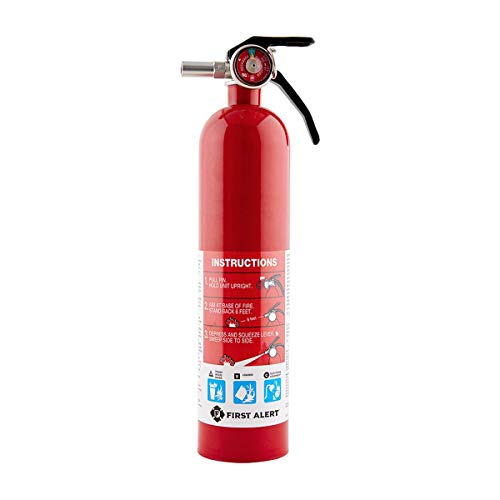
Kidde Basic 110 Fire Extinguisher for Home, 1-A:10-B:C, FA110G, 1 Pack
$19.97 Check pricePrices change often - VOLTSPARK
190-490nm OD6+ Laser Safety Glasses Adjustable Frame, 405/445/450/473nm UV
$25.89 Check pricePrices change often - CARLANY
190nm-490nm OD 6+ Laser Safety Eye Protection Glasses UV Violet & Blue
$27.59 Check pricePrices change often




Safety
Common questions
What wavelength does a diode laser emit?
Most desktop diode lasers emit light around 445 nanometers, which is visible blue light. This is different from a CO2 laser, which emits at 10.6 micrometers, a far infrared wavelength invisible to the eye. The wavelength determines which materials absorb the beam and which ones it passes through.
Can a diode laser cut clear acrylic if I run it at maximum power?
No. Clear acrylic is transparent to light around 445 nanometers, so the beam passes through the material rather than being absorbed and converted to heat, at any power setting. Black and colored cast acrylic do absorb the beam and cut normally on a diode laser.
Why does my diode laser only bleach anodized aluminum instead of engraving it?
A diode beam can bleach the colored dye layer in anodized aluminum, which removes color from the surface rather than cutting or deeply engraving the metal underneath. That is marking, not engraving, and it is the extent of what a desktop diode laser does to metal without a special coating.
Does changing the lens focal length change how deep a laser cuts?
Focal length changes spot size and depth of field, which changes power density and how forgiving the focus height is, and both affect cutting performance. A shorter focal length concentrates the same power into a smaller area, which increases power density but narrows the height range where the beam stays sharply focused.
Is the percentage power on my laser software the same as the machine wattage on the box?
No. Percentage power refers to the rated optical output of the diode module, not the electrical draw or the marketing wattage on the packaging. A machine sold as "80 W" may combine several diode chips for a real optical output closer to 20 W, so settings do not transfer directly between different machines.